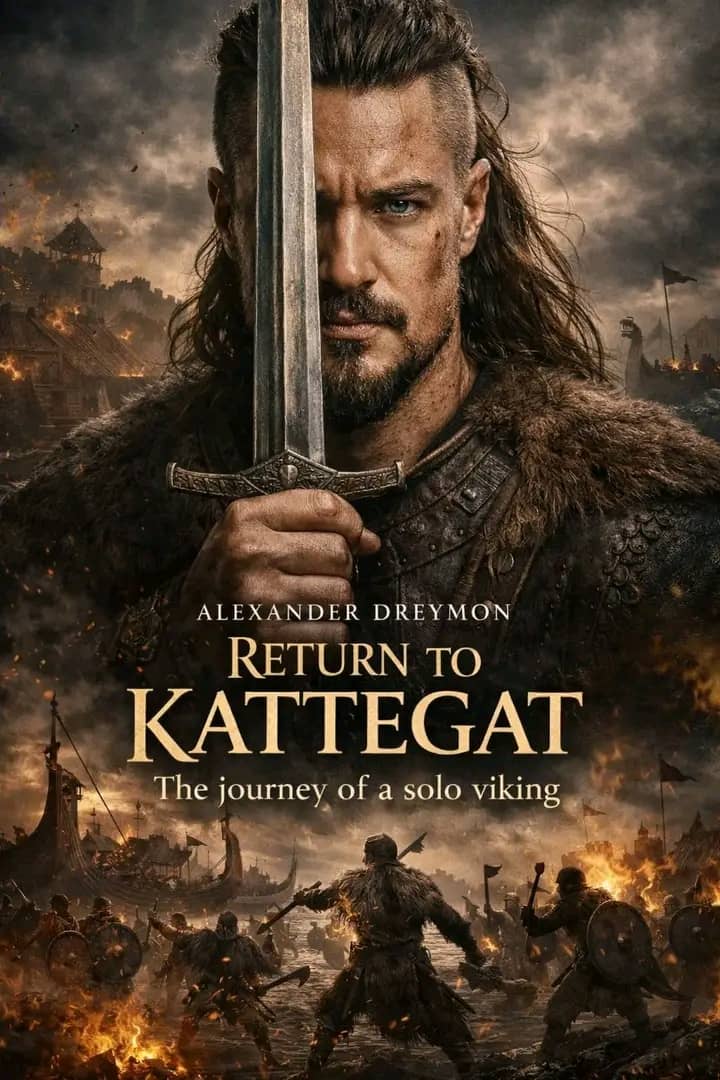
He Left Kattegat Alone… What Awaits Him When He Returns Will Change Viking History Forever! Details Here
He left Kattegat without ceremony, without an army, and without looking back. No horns sounded. No shields clashed in farewell. Just the quiet creak of a single longship cutting through the mist, carrying a man burdened by exile, prophecy, and unfinished destiny. To the people of Kattegat, his departure felt like the end of a chapter. To history, it was only the pause before a storm.
For years, Kattegat had stood as the beating heart of the Viking world — a place of kings, warriors, and gods whispered into the fire-lit nights. But power breeds envy, and legacy invites betrayal. When he left, the throne was contested, alliances were fragile, and the old ways were being challenged by ambition sharper than any blade. Many believed he would never return. Others prayed he wouldn’t.
The man who sailed away was not the same man who would one day come back.
Far from Kattegat’s familiar shores, his journey became one of survival and transformation. He walked lands untouched by Norse boots, stood before rulers who neither feared Odin nor respected Viking steel, and learned that the world was far larger — and crueler — than the sagas had promised. Each battle stripped something from him. Each victory added something darker, wiser, and more dangerous in its place.
While he was gone, Kattegat changed.
The city he once knew slowly turned against itself. Old loyalties fractured. Brothers stood on opposite sides of the great hall. The gods were questioned, traditions rewritten, and whispers of civil war echoed through the fjords. The people grew restless, yearning for a leader strong enough to unite them — or ruthless enough to conquer them.
And then the signs began.
Strange dreams haunted the seers. Ravens gathered where they never had before. The sea grew unnaturally calm, as if holding its breath. The elders spoke of ancient prophecies long dismissed as myth — tales of a wanderer who would return not as a man, but as a force that would reshape the fate of the North.
When his longship finally appeared on the horizon, Kattegat did not rejoice.
It trembled.
He returned carrying more than scars. He brought knowledge stolen from foreign kings, strategies learned through loss, and a vision that threatened the very foundation of Viking life. He no longer sought approval, nor did he crave the crown in the way he once had. What awaited him in Kattegat was not a homecoming — it was a reckoning.
Enemies who had grown powerful in his absence now faced a rival forged by exile. Allies who once doubted him saw something unsettling in his eyes: certainty. The certainty of a man who had already accepted his fate and was prepared to drag an entire world with him if necessary.
What happened next would not simply decide who ruled Kattegat.
It would redefine what it meant to be a Viking.
Old gods would be challenged. New legends would be written in blood and fire. The balance between exploration and conquest, faith and ambition, family and destiny would collapse — and from the ruins, a new era would rise.
He left Kattegat alone.
He returned as the spark of a revolution.
And Viking history would never be the same again.