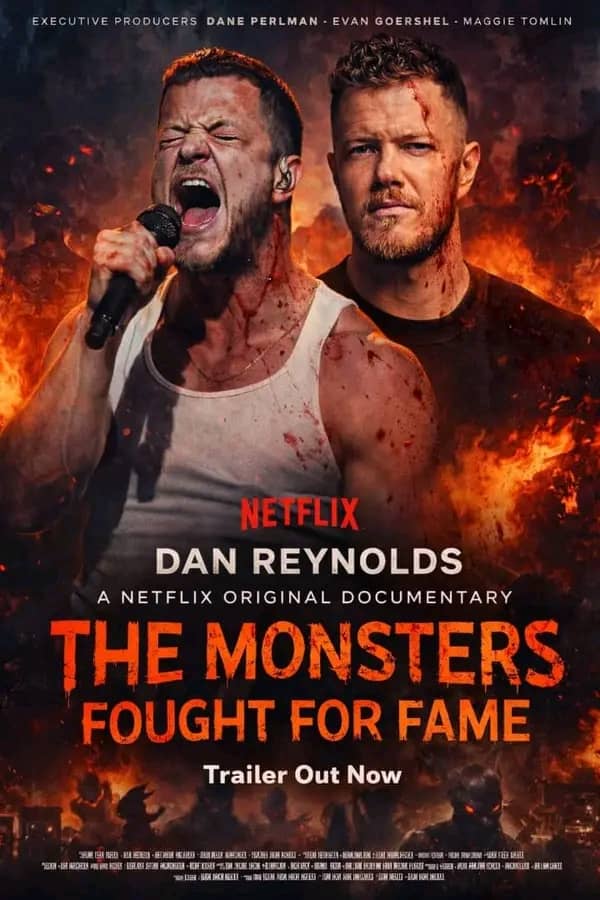
YOU KNOW HIS NAME, NOT HIS STORY!Dan Reynolds’ Story Told in Cinema as Netflix Exposes the Dark Side of Fame: The Monsters Dan Reynolds Fought Will Shock You!
For over a decade, Dan Reynolds has been a global anthem-maker—the thunderous voice behind Imagine Dragons’ stadium-shaking hits and introspective lyrics that millions sing like prayers. But behind the confetti cannons, chart-topping success, and sold-out tours lies a story far more complicated than fame ever suggests. In a powerful cinematic portrait, Netflix pulls back the curtain to reveal the battles Reynolds fought when the lights went out—and the monsters that nearly consumed him.
This isn’t a glossy celebration of celebrity. It’s a raw excavation of what it costs to be seen by the world while struggling to see yourself.
From the beginning, Reynolds’ rise was meteoric. Imagine Dragons exploded onto the scene with songs that blended bombast and vulnerability, turning private pain into public catharsis. Yet as the band ascended, Reynolds’ inner world began to fracture. The documentary traces how relentless touring schedules, creative pressure, and the expectation to always be “on” intensified a growing storm inside him.
At the heart of the film is Reynolds’ candid reckoning with mental health. Depression and anxiety, long whispered about in lyrics, are confronted head-on. Through intimate interviews and stark visual storytelling, Reynolds describes how success didn’t silence the darkness—it amplified it. The higher the climb, the more terrifying the fall felt. Fame, the film suggests, can be a magnifying glass: everything burns hotter beneath it.
Netflix doesn’t shy away from the physical toll either. Reynolds has lived with ankylosing spondylitis, a chronic inflammatory disease that causes persistent pain and fatigue. The documentary captures the irony of a frontman expected to leap across stages while his body quietly rebels against him. Concert footage cuts to moments backstage where pain management, exhaustion, and sheer willpower collide. It’s a reminder that the bodies we idolize onstage are often fighting wars we never see.
Perhaps most striking is the exploration of Reynolds’ crisis of belief and identity. Raised within a strict religious framework, he found himself questioning long-held doctrines as his worldview expanded. The film portrays this not as rebellion, but as anguish—the fear of losing community, family understanding, and a sense of spiritual grounding. For Reynolds, faith wasn’t just belief; it was belonging. Watching that foundation crack became one of the most painful chapters of his journey.
The documentary’s emotional core lies in its honesty. Reynolds speaks not as a rock god, but as a man learning—sometimes failing—to survive. He opens up about therapy, vulnerability, and the slow, uneven road toward healing. The message is clear: strength isn’t the absence of struggle; it’s the courage to face it.
Visually, the film leans into contrast. Massive crowds chanting lyrics dissolve into quiet, lonely hotel rooms. Stadium lights fade into dim, reflective spaces where Reynolds wrestles with himself. The effect is haunting and humanizing. You don’t just watch his story—you feel the weight of it.
Yet this is not a story of defeat. It’s a testament to resilience. Through advocacy, openness, and music that dares to say the unsayable, Dan Reynolds transforms pain into purpose. The monsters don’t disappear—but they lose their power when named.
By the final frame, one truth resonates: you may know his name, but you didn’t know his story. Netflix’s cinematic deep dive doesn’t just expose the dark side of fame—it offers a mirror to anyone who has ever smiled in public while breaking in private.