The First Note Struck — And The World Ignited: André Rieu’s Unforgettable “Hava Nagila” Moment..
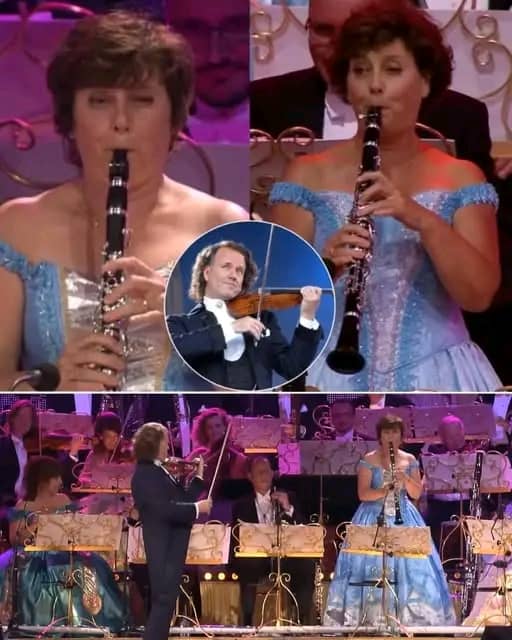
The atmosphere in the Maastricht arena was already electric as thousands of concertgoers eagerly awaited the next musical masterpiece. But nothing could have prepared the audience for what was about to unfold. As André Rieu, the maestro of violin and showman extraordinaire, lifted his bow and drew the first, daring notes of “Hava Nagila,” an entire universe seemed to shift. That single note was not merely sound; it was an ignition—setting off a firestorm of emotion, celebration, and unadulterated joy.
From the moment Rieu’s violin voice soared across the hall, something primal awakened. The traditional Jewish folk song, known for its lively, infectious rhythm, instantly transformed the space into a living, breathing festival. The audience, caught in the spell, responded immediately. Clapping thundered through the arena, a rhythmic heartbeat echoing the song’s lively pulse. Feet pounded in unison, stamping a collective rhythm that seemed to shake the very foundations of the venue.
Voices rose in spontaneous chorus, a wave of sound that built and built until it became a roaring, unstoppable force. What began as a simple melody of tradition rapidly erupted into a celebration of life itself. It was as if the music had unlocked a universal language of happiness, transcending borders, cultures, and generations. The arena was no longer just a concert hall—it became a vast, wild festival where only the purest expressions of joy were allowed to thrive.
André Rieu’s mastery extended beyond his technical skill; it was his ability to command the stage and wield his violin as an instrument of emotion that truly captivated the audience. His performance of “Hava Nagila” was more than a rendition—it was an invitation to dance, to revel, to forget everything but the moment. With each stroke of his bow, he seemed to channel the energy of the crowd, elevating their collective exhilaration to new heights.
The violin didn’t just play; it commanded. Rieu’s expressive technique conveyed a spectrum of feelings—exultation, nostalgia, unity. His eyes sparkled with joy, and his movements became an extension of the music’s infectious spirit. The audience responded in kind, their cheers and applause fueling the performance like a wildfire spreading uncontrollably. It was a rare, magical symbiosis between performer and listener—where music becomes a living, breathing entity capable of transforming an ordinary evening into an extraordinary memory.
As the song reached its crescendo, the entire arena seemed to pulse with life. People danced in their seats, jumped to their feet, and waved their hands in the air. The energy was so intense that it felt as if the walls themselves were vibrating. Strangers embraced, friends cheered, and entire sections of the crowd were united in a shared experience of pure, uncontainable joy.
Rieu’s “Hava Nagila” wasn’t just a performance; it was a celebration of cultural heritage and human connection. It reminded everyone present that music—at its best—has the power to break down barriers, ignite passions, and bring people together in a moment of collective euphoria. For those few minutes, the Maastricht arena was transformed into a microcosm of the world’s happiness—a place where the only language spoken was joy.
When the final notes faded, a thunderous applause erupted that seemed to reverberate long after the music stopped. The audience was left breathless, their hearts pounding with the memory of that electrifying moment. André Rieu’s violin had commanded not just the stage but the entire room, uniting everyone in a shared experience of bliss.
That night, in Maastricht, music did what it does best: it ignited the world. And André Rieu, with his magic touch, proved once again that sometimes, all it takes is a single note to change everything.