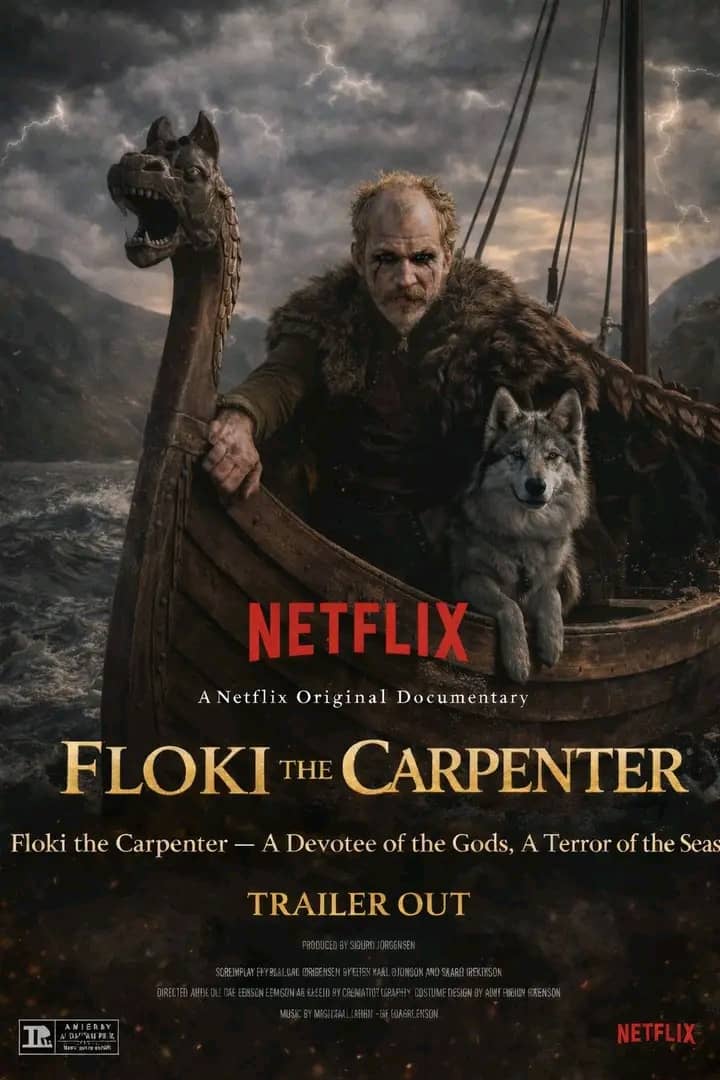
Netflix Presents: Floki the Carpenter — A Devotee of the Gods, A Terror of the Seas. Watch Below
Netflix dives deeper into the mythic heart of the Viking age with Floki the Carpenter, a gripping new saga that transforms one of Norse legend’s most enigmatic figures into the center of a thunderous epic. Equal parts spiritual odyssey and brutal seafaring drama, the series charts Floki’s rise from inspired shipbuilder to feared voyager—guided by gods he worships with frightening devotion and driven by a destiny that refuses to stay buried.
At the core of Floki the Carpenter lies a character study unlike any Viking tale before it. Floki is not a king chasing crowns or a warlord counting spoils. He is a believer—fiercely, dangerously so. The gods speak to him in whispers and visions, and he listens with an intensity that unsettles allies and enemies alike. His faith is not gentle; it is a forge that hardens his will and sharpens his cruelty when the omens demand blood. Netflix leans into this duality, portraying Floki as both holy artisan and merciless terror, capable of creating vessels of beauty and unleashing storms of violence upon the open sea.
The series opens in smoke and sawdust, where Floki’s hands carve the future from timber. His ships are more than tools of conquest—they are sacred instruments, born of ritual and sacrifice. Every keel laid is an offering; every sail raised, a prayer. As his designs evolve, so does his reputation. Whispers spread of a carpenter whose longships outrun fate itself, whose prows cut through waves like blades blessed by Odin. Soon, chieftains come calling, wars ignite, and Floki’s creations carry warriors to shores soaked in legend.
Yet Floki the Carpenter is no simple celebration of conquest. The show interrogates belief with ruthless honesty. What happens when devotion eclipses compassion? When prophecy becomes permission? As Floki ventures farther from home—across iron seas and into lands that challenge his understanding of the gods—his faith is tested by doubt, loss, and the terrible cost of obedience. Netflix crafts these moments with haunting restraint: long silences broken by creaking wood, prayers muttered over bloodied decks, and eyes that gleam with conviction even as the world burns.
Visually, the series is a triumph. Storms rage with cinematic ferocity, shot with a tactile realism that makes salt spray sting and thunder feel personal. Battles are intimate and chaotic, favoring close quarters and raw emotion over spectacle alone. Between clashes, the camera lingers on the quiet rituals that define Floki’s inner life—carvings etched with runes, fires tended like living spirits, and dreams where gods appear neither kind nor cruel, only inevitable.
The supporting cast deepens the narrative with moral friction. Warriors who revere Floki’s genius fear his unpredictability. Leaders rely on his ships while questioning his counsel. Strangers from distant shores introduce philosophies that unsettle his certainties, forcing Floki to confront a question he has long avoided: is faith a compass, or a chain? These relationships ground the myth, turning epic voyages into intimate reckonings.
What sets Floki the Carpenter apart is its refusal to simplify. Floki is neither hero nor villain; he is a force shaped by belief, ambition, and fear. His terror on the seas is earned not merely through violence, but through the conviction that the gods are watching—and approving. Netflix trusts the audience to wrestle with this complexity, offering no easy absolution and no tidy judgments.
As the season builds toward its thunderous finale, the stakes escalate beyond raids and rivalries. Floki must choose between the voice of the gods as he hears it and the lives tethered to his choices. The sea, once his sanctuary, becomes a mirror reflecting the cost of devotion untempered by mercy. It is here, amid crashing waves and burning horizons, that Floki the Carpenter finds its most haunting power.
Bold, brutal, and spiritually charged, Netflix Presents: Floki the Carpenter is a Viking saga that dares to ask what we become when belief guides every blow and every blessing. For fans of mythic drama, character-driven epics, and stories that linger long after the sails disappear over the horizon, this is a voyage worth taking.